




The terms "in vivo" and "in vitro" represent distinct approaches in scientific research, each contributing to advancements in medical knowledge while possessing unique limitations. "In vivo" refers to studies conducted within a living organism, while "in vitro" describes research performed in a controlled laboratory environment, such as in a test tube or petri dish.
Both methods are crucial in drug discovery, medical research, and disease research, offering advantages and challenges across pharmaceutical testing and biological research.
In vitro studies are performed outside a living organism using isolated cells, tissues, or biomolecules. Common use cases include mechanism studies, target validation, cytotoxicity screening, and rapid high-throughput compound triage before advancing candidates to animal models.
Speed and scalability: Parallel screening of large compound panels and dose ranges via high-throughput drug screening.
Control and reproducibility: Tight control over variables (media, exposure time, temperature) and In Situ readouts of molecular mechanisms.
Lower ethical and cost burden: Early risk assessment without exposing animals/humans.
Mechanistic clarity: Clean readouts on pathways, cell signaling, and direct target effects using cell-based assays and genetic testing.
Lack of whole-body context: Absorption, distribution, metabolism, and excretion (ADME) are absent, including realistic drug absorption.
Simplified biology: 2D cultures may not recapitulate tissue architecture or immune interactions; ex vivo and microphysiological systems can help bridge gaps.
Translatability risk: Efficacy observed in vitro does not guarantee efficacy or safety in vivo; in silico modeling and chemical systems biology can support informed decisions regarding in vitro testing.
Further reading: See our strategic comparison: Comparing In Vivo and In Vitro Antibody Production: A Strategic Guide.
In vivo studies investigate how an intervention behaves within a whole organism (e.g., mouse models, then humans). They are used to evaluate pharmacokinetics/pharmacodynamics (PK/PD), efficacy in disease models, safety/tolerability, and on-target vs off-target effects across interacting systems.
Physiologic relevance: Captures metabolism, immune interactions, organ crosstalk, and realistic drug absorption.
PK/PD alignment: Realistic exposure profiles, half-life, and biodistribution suitable for chemotherapy drug evaluation and cancer immunotherapy strategies.
Endpoints that matter: Survival, tumor growth inhibition, toxicity, behavior, and biomarkers that inform randomized controlled trials.
Time and cost: Longer timelines, specialized facilities, and compliance requirements for animal studies.
Species differences: Results from animal models may not fully translate to humans ahead of clinical trials.
Experimental complexity: More variables; careful study design and controls are critical before pharmaceutical testing in humans.
Related reading:
Precision applications of ADCs: Precision In Vivo Research: How ADCs Make the Difference
Bispecifics in models: Transforming In Vivo Research with Bispecific Antibodies
A drug candidate that excels in vitro can fail in vivo due to inadequate exposure, active metabolites, immune modulation, or off-target effects. Conversely, in vivo signals often guide back-translation, refining in vitro models (e.g., 3D cultures, co-cultures, organoids) to better mirror human biology and de-risk later trials.
In vitro studies play a pivotal role in early-stage research, particularly in drug development. For instance, scientists may test the effects of a potential cancer treatment on cultured cells in test tubes, or laboratory dishes. These studies are preferred initially due to ethical considerations, as they avoid exposing humans or animals to unknown risks.
One significant advantage of in vitro research is the ability to rapidly test multiple compounds, allowing researchers to focus on those that show the most promise. However, in vitro studies have limitations. The absence of biokinetics the study of how drugs are absorbed, distributed, metabolized, and excreted by the body, can make it challenging to predict how a drug will behave in a living organism. Thus, while in vitro results are valuable, they do not always translate directly to in vivo outcomes.
In contrast to in vitro studies, in vivo research is necessary to observe how a substance interacts with the entire organism. A drug that performs well in vitro may not be effective in vivo due to the body's complex metabolic processes.
For example, a drug might appear to be a promising cancer treatment in a lab dish but fail to be absorbed properly when administered to a human or animal. Additionally, the drug might be rapidly broken down or rendered ineffective by the body's natural defenses.
In vivo studies often begin with animal models, such as mice, before progressing to human trials. These animal studies provide critical insights into how a drug interacts with various biological systems. However, differences between species can lead to varying results; a drug that is effective in mice might not work as well in humans, highlighting the need for careful interpretation of in vivo data.
Related: In Vivo vs. In Vitro Antibody Production: A Comparative Analysis for Biotech Applications
When evaluating research on treatments, especially for conditions like cancer, it's crucial to distinguish between in vitro and in vivo studies. While in vitro studies are foundational, laying the groundwork for further research, their findings often take time to translate into practical applications for patients.
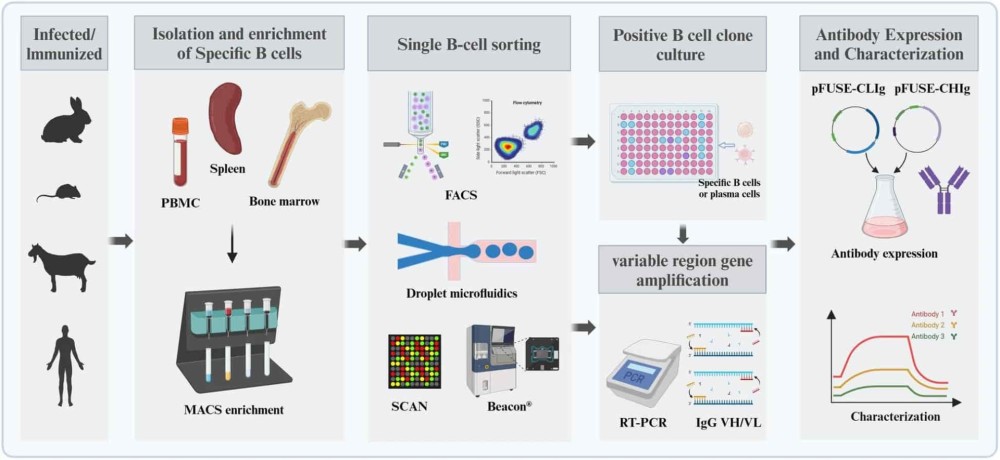
In vivo studies, on the other hand, directly examine the effects of a treatment within a living organism, providing insights that are more immediately relevant to clinical practice. Understanding the differences between these two research approaches helps in critically assessing the potential impact of scientific discoveries. In antibody programs, discovery methods like Single B Cell Screening, Hybridoma Sequencing, and format exploration with VHH antibodies (camelid antibodies) support downstream cancer immunotherapy strategies and advanced analytics such as glycan profiling.
Advance your in vivo program with Abinvivo. Speak with our scientists to scope your model, endpoints, and timeline. Biointron's catalog products for in vivo research can be found at Abinvivo, where we have a wide range of Benchmark Positive Antibodies, Isotype Negative Antibodies, Anti-Mouse Antibodies, Bispecific Antibodies, and Antibody-Drug Conjugates. Contact us to find out more at info@biointron.com or +86 400-828-8830 / +1(732)790-8340.
References:
Chung, T. D. Y., Terry, D. B., & Smith, L. H. (2015). In Vitro and In Vivo Assessment of ADME and PK Properties During Lead Selection and Lead Optimization—Guidelines, Benchmarks and Rules of Thumb. Assay Guidance Manual. Eli Lilly & Company & NCATS, NIH. https://www.ncbi.nlm.nih.gov/books/NBK326710/
Chang, X., Moreau, M., & Hines, R. N. (2022). IVIVE: Facilitating the Use of In Vitro Toxicity Data in Risk Assessment. Environmental Health Perspectives, 130(5), 050801. https://pmc.ncbi.nlm.nih.gov/articles/PMC9143724/
Biointron announces limited-time RushData launch pricing for high-throughput ant……
August 2026 brought another mix of acquisitions, licensing agreements, strategic……
Antibody discovery often begins with a highly diverse population of B cells, onl……
As larger candidate panels move from computational design into the laboratory, a……