




Affinity maturation is the central process through which antibodies evolve to bind their antigens with higher specificity and affinity. In vivo, this process occurs in the germinal centers (GCs) of secondary lymphoid organs, where B cells undergo iterative rounds of proliferation, somatic hypermutation (SHM), and selection. SHM is initiated by the enzyme activation-induced cytidine deaminase (AID), which introduces point mutations into the variable regions of immunoglobulin genes.
Mutated B cell clones are subjected to selection pressures based on their ability to bind antigens presented on follicular dendritic cells (FDCs) and to receive survival signals from T follicular helper (Tfh) cells. This selection is not purely deterministic. While classical models emphasized the dominance of high-affinity B cells, recent research suggests that GCs are permissive environments. They allow lower-affinity clones to persist and evolve, supporting clonal diversity and enabling the emergence of antibodies with broadly neutralizing capacity.
This biological foundation underpins both natural immunity and therapeutic antibody engineering, where key molecular players, including BCRs, AID, FDCs, and Tfh cells, drive the maturation landscape.
Affinity increases during maturation are mediated by specific mutations in the complementarity-determining regions (CDRs) of antibody variable domains, particularly CDR-H3, which frequently contributes the majority of antigen contacts. These mutations impact binding via two principal mechanisms:
Enthalpic optimization, through improved shape complementarity, hydrogen bonding, and electrostatics.
Entropic tuning, by reducing flexibility through rigidification of loop conformations.
Experimental and computational analyses have confirmed that rigidification of the CDR-H3 loop can result in substantial increases in on-rate kinetics without compromising off-rate values, especially when pre-organization enables rapid antigen binding. However, not all affinity maturation pathways are identical. Some lineages rely on flexibility to accommodate diverse antigen variants, reflecting trade-offs between affinity and breadth.
In therapeutic antibody development, in vitro affinity maturation replicates this biological process using recombinant techniques. The two main mutation strategies include:
Random mutagenesis, often via error-prone PCR or saturation mutagenesis.
Targeted mutagenesis, such as site-directed alanine scanning.
These strategies are typically coupled with display technologies, which serve as selection platforms. The most widely adopted systems are:
Phage display, offering vast library diversity and mature workflows.
Yeast surface display, advantageous for eukaryotic folding and FACS-based screening.
Ribosome display, enabling cell-free high-throughput affinity screening.
Mammalian display, critical for ensuring native folding and post-translational modifications.
Affinity-improving mutations are selected based on binding kinetics, often measured using surface plasmon resonance (SPR) or bio-layer interferometry (BLI). However, experimental maturation faces limitations: library sizes are constrained by transformation efficiency, and combinatorial mutations across all CDRs are practically intractable, with full coverage would requiring libraries on the order of 10³⁹ variants.
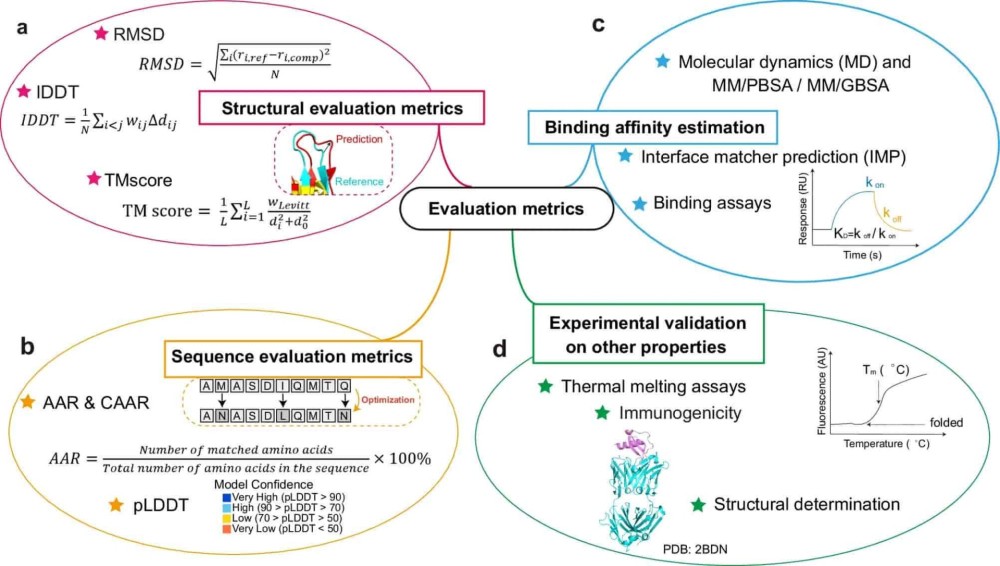
Computational methods are increasingly used to guide and accelerate affinity maturation. These include:
3D structural modeling, using crystallography data or predicted models to map paratopes and optimize contacts.
Energy minimization algorithms, such as Monte Carlo simulations and Dead-End Elimination, which allow virtual screening of large variant libraries.
Docking simulations, which estimate the binding free energy of mutant antibody-antigen complexes.
Molecular dynamics (MD) simulations, used to analyze conformational flexibility and predict changes in enthalpy/entropy balance.
Software platforms such as GROMACS, CHARMM, and Rosetta have demonstrated the ability to identify high-affinity mutations that correlate with experimental binding data.
In one example, Mahajan et al. used electrostatics-based optimization to improve the binding of an anti-α-synuclein antibody by 202-fold. Another study used MD simulation to engineer anti-VEGF antibodies with enhanced binding by correlating mutation-induced energy changes with experimental KD values.
NGS has transformed affinity maturation studies by enabling deep profiling of antibody repertoires over time. It is now possible to reconstruct clonal lineages, track somatic mutations, and identify convergent maturation pathways.
Studies using longitudinal sampling of HIV or influenza patients have mapped the co-evolution of broadly neutralizing antibodies (bnAbs) and viral escape variants. These data have revealed that while SHM accumulates over time, only specific mutation pathways lead to functional improvement; so many lineages acquire high mutation loads without increased affinity or breadth.
From a vaccine design perspective, such insights allow researchers to select immunogens that preferentially activate germline precursors capable of productive maturation. These principles are now used to design sequential immunization protocols that mimic natural antibody-virus co-evolution.
Recent computational models have challenged the classical “death-limited” view of GC selection, in which only the highest-affinity B cells survive. Instead, “birth-limited” models emphasize the role of proliferative potential conferred by Tfh signals and antigen acquisition, allowing for a broader range of BCR affinities to remain in the cycle.
These models predict that low-affinity B cells are not eliminated immediately but can persist and eventually dominate via clonal bursts, which are stochastic expansions triggered by beneficial mutations. This stochasticity supports the generation of antibodies with broad specificity, crucial for responding to mutating pathogens.
Incorporating such principles into in silico maturation simulations enables better prediction of viable antibody variants and supports diversity-oriented engineering. This is a useful approach for complex targets like viruses or membrane proteins.
Despite technological advances, several challenges remain:
Affinity vs. Specificity Trade-offs: Higher affinity can lead to increased non-specific binding due to overuse of aromatic residues like tyrosine and tryptophan.
Developability Risks: Affinity-enhancing mutations may reduce stability or increase aggregation.
Incomplete Structural Data: Accurate modeling depends on high-resolution structures, which are not always available.
Limited Predictive Accuracy: In silico predictions often require experimental validation.
These challenges highlight the need for integrated platforms combining experimental, structural, and computational methods for robust affinity maturation.
References:
Doria-Rose, N. A., & Joyce, M. G. (2015). Strategies to guide the antibody affinity maturation process. Current Opinion in Virology, 11, 137. https://doi.org/10.1016/j.coviro.2015.04.002
Tabasinezhad, M., Talebkhan, Y., Wenzel, W., Rahimi, H., Omidinia, E., & Mahboudi, F. (2019). Trends in therapeutic antibody affinity maturation: From in-vitro towards next-generation sequencing approaches. Immunology Letters, 212, 106-113. https://doi.org/10.1016/j.imlet.2019.06.009
Vajda, S., Porter, K. A., & Kozakov, D. (2021). Progress toward improved understanding of antibody maturation. Current Opinion in Structural Biology, 67, 226. https://doi.org/10.1016/j.sbi.2020.11.008
Nakarin, F., & Sprenger, K. G. (2025). A paradigm shift in simulating affinity maturation to elicit broadly neutralizing antibodies. Frontiers in Immunology, 16, 1627674. https://doi.org/10.3389/fimmu.2025.1627674
Biointron announces limited-time RushData launch pricing for high-throughput ant……
August 2026 brought another mix of acquisitions, licensing agreements, strategic……
Antibody discovery often begins with a highly diverse population of B cells, onl……
As larger candidate panels move from computational design into the laboratory, a……