
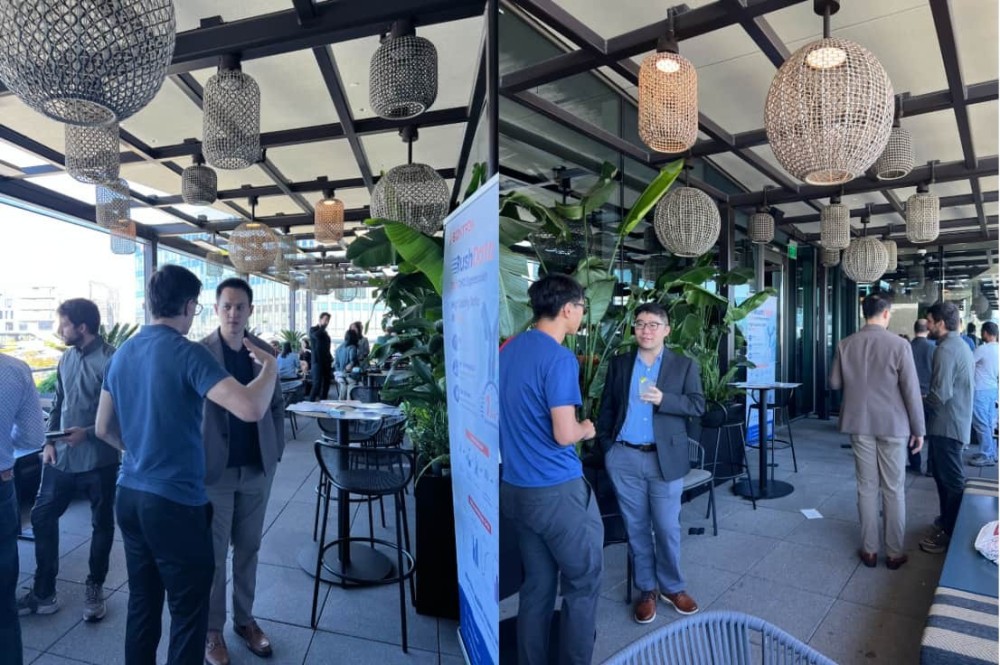


PEGS (Protein & Antibody Engineering Summit) Boston 2026 was held on May 11-15, 2026. The event brought together industry leaders from the pharmaceutical and biotech sectors to discuss protein and antibody engineering, drug development, immunotherapy, radiotherapy, and AI/ ML-driven biologics research.
Our Senior Vice President of R&D, Lei Shi, PhD, presented on “Accelerating Antibody Discovery: Integrating Microfluidics, HT Expression, and Early Developability Platform”.
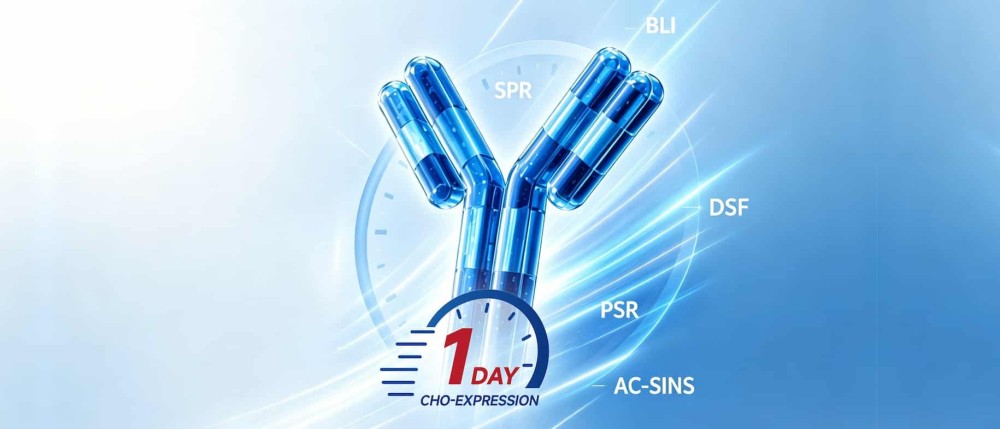
Increasingly, antibody drug development requires a quick, holistic assessment from the discovery stage using a powerful platform, which demands experienced scientists to make smart, strategic choices. Biointron's unique single B cell sorting-based antibody screening can help identify a population of diverse and functional hits with a shortened timeline. Integrated with our high-throughput expression, validation, and developability assay platforms, the path from hits to candidate can be more efficient with data beyond just binding and time less spent.
We were also delighted to see our Q1 2026 Travel Grant Winner Dr. Bin Liu (University of Houston) present at PEGS Boston 2026 on “Antibody-Bottlebrush Conjugates for Targeted Cancer Therapy”.
Expansion of AI/ML across biologics discovery and development: broad use of machine learning in antibody design, developability prediction, protein fitness optimization, digital analytics, immunogenicity assessment, and protein expression optimization.
Engineered, conditional, and multispecific biologics: emphasis on T cell engagers, bispecific and trispecific antibodies, conditional activation, co-stimulation, and formats designed to improve tumor selectivity and functional potency.
Growth of ADC innovation: focus on dual payloads, next-generation linkers, bispecific ADCs, immune-modulating payloads, oligonucleotide conjugates, and clinical translation of established ADC platforms.
Integration of expression and manufacturability earlier in discovery: difficult-to-express proteins, cell-free systems, codon optimization, intronized transgenes, regulatory elements, automation, and workflow design.
Target biology-driven modality selection: intracellular and “undruggable” targets, pMHC-directed TCR-mimetic antibodies, ECM-targeted nanobodies, dark proteome antigens, autoimmune targets, and CNS delivery strategies.
Immunogenicity, analytics, and regulatory confidence: AI/ML prediction, HLA presentation, bioassay development, digital representation of ADCs, and characterization of novel biotherapeutics.
Machine learning was a central theme, focusing on digital integration in biotherapeutic analytics, AI/ML-based immunogenicity prediction, and machine learning for protein engineering, with topics including digital twins, real-world data, automated platforms, structure-based prediction, explainable AI, generative AI, and biologics optimization.
In antibody discovery, AI was positioned as part of end-to-end biologics design rather than a standalone tool. AI-native biologics discovery used proprietary databases, high-throughput experimental data, and curated synthetic data. Machine learning-assisted protein fitness optimization, AI-generated protein-function prediction, and deep learning-based binder design was also discussed.
Generative and structure-based approaches mentioned: AlphaFold, ImmuneBuilder, ESM, AntiBERTy, ProteinMPNN, RFDiffusion, BindCraft, and RFAntibody, with attention to tool selection, method optimization, and design selection.
The Engineering stream focused on discovery platforms, precision targeting, conditional activation, and integration of experimental and in silico methods to improve antibody function and targeting.
Several lectures show increasing interest in target classes beyond conventional extracellular tumor antigens. Alloy Therapeutics’ presentation on a highly selective HLA-A*03 DARKFOX TCRm x CD3 engager described discovery of pMHC-binding antibody clonotypes using transgenic mice and a TCR-mimetic discovery platform, followed by affinity maturation and bispecific T cell engager formatting.
Targeted radioligand therapy also appeared as an antibody engineering application. Matrisome Bio’s presentation described ECM-specific nanobodies discovered by phage display and engineered as radioisotope carriers for delivery to disease-associated extracellular matrix in tumors and metastases.
The dark proteome was described as novel proteins from noncoding regions, with a focus on cryptic, noncanonical, and post-translationally modified epitopes for biologics engineering.
Multispecific antibodies, T cell engagers, bispecifics, conditional antibodies, and novel scaffolds are major areas of development. Patrick Baeuerle of MPM Capital’s keynote compared T cell-engaging antibodies with CAR T cell therapies, noting that TCEs are bispecific antibody-based adaptor proteins that redirect cytotoxic T cells to selected target cells.
Multispecific antibodies also included non-oncology applications. Presentations covered lutikizumab, a dual-variable domain IgG targeting IL-1α and IL-1β, and a bispecific antibody designed to inhibit PAD2 and PAD4 activity and generation of citrullinated autoantigens in rheumatoid arthritis.
Conditionally active multispecific formats were another major topic. Roche’s presentation described single-chain Fab-based prodrug approaches for chain-exchange conditional activation of T cell engager functionality, while Sensei Bio described pH-selective CD28xVISTA bispecific antibodies designed to promote localized T cell activation in acidic, myeloid-rich tumor microenvironments.
Major ADC topics included dual payloads, next-generation linkers, and conjugates integrating degraders, cytokines, and oligonucleotides.
Daiichi Sankyo’s keynote focused on the DXd ADC pipeline, including trastuzumab deruxtecan, a HER2-directed antibody conjugated to a topoisomerase I payload, and broader use of the DXd platform with different antibodies targeting multiple cancers.
Bispecific ADCs and multi-mechanism conjugates were also mentioned. AlphaMab Oncology’s session covered PD-L1-centered ADC strategies, including coformulation, “2-in-1” bispecific ADC design, and tetravalent bispecific ADC formats. They also discussed China’s ADC landscape, including TCE-ADC, bispecific ADCs, and dual-payload ADCs.
Besides oncology payloads, Roche presented antibody conjugates for oligonucleotide delivery in neurological indications, using a Brainshuttle antibody to facilitate CNS access through blood–brain barrier transcytosis.
Expression and manufacturability were treated as core requirements for biologics development. The conference emphasized expression, purification, and production of challenging proteins. A featured panel addressed convergence between computational creativity, experimental rigor, and hybrid talent, with discussion of how AI-generated designer proteins require experimental confirmation across mammalian, yeast, E. coli, and cell-free expression systems.
Protein production optimization topics included cell-free protein synthesis, GPCR production in nanodiscs, codon optimization, intronized transgenes, promoter engineering, polyA terminator optimization, and regulatory elements for improved yield.
Automation was also positioned as part of antibody engineering workflows, particularly automated liquid handling by assay development and optimization.
The Immunogenicity stream moved from foundational training to AI/ML-driven immune response prediction and bioassay development.
A presentation from Eli Lilly described a universal monoallelic HLA Class II immunopeptidomic platform for defining therapeutic protein immunogenicity potential, including a system for examining the immunogenic potential of human IgG and a case study with adalimumab.
Analytical challenges for complex biologics addressed digital representation and bioanalytical characterization of ADCs, noting that conjugation of antibodies and small molecules complicates registration and property calculation compared with either modality alone.
The autoimmune disease agenda included antibody and conjugate strategies for type 1 diabetes, autoantigen-drug conjugates, and bispecific antibodies designed to restore immune balance. Xencor’s presentation covered CD19×CD3, CD20×CD3, and IL2RG-directed bispecifics for autoimmune disease.
The conference also reflected interest in non-IgG scaffolds and peptide-like formats. Engineering sessions included orally bioavailable cyclotides as inflammatory cytokine antagonists, VHH/scFv discovery platforms, ECM-specific nanobodies, and peptide therapeutics.
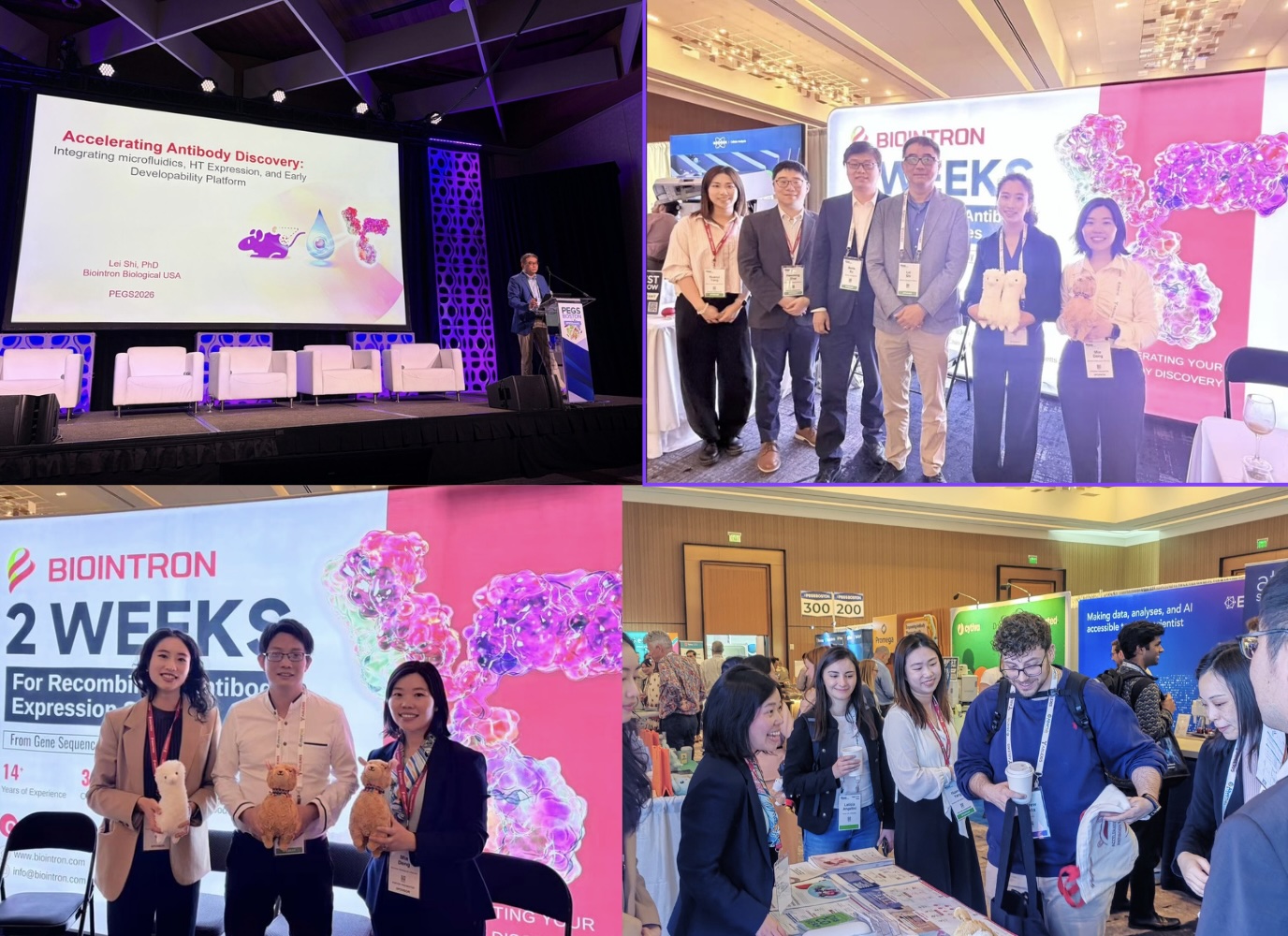
Thank you to everyone who visited our booth at PEGS Boston 2026 to learn about our services! We had a fantastic time chatting with you and how it can help you achieve antibody development. Our expert team would be happy to answer any follow-up questions. Feel free to email us at info@biointron.com or visit our website at www.biointron.com.
Biointron’s Antibodies After Hours: From Algorithms to Antibodies was held at Th……
Discover how high-throughput wet-lab validation connects AI-designed antibody se……
Understand the hybridoma generation process for monoclonal antibody production, ……
Artificial intelligence (AI) is changing how therapeutic antibodies are discover……