



Antibody-based therapeutics, including monoclonal antibodies and antibody-drug conjugates (ADCs), represent a major and expanding class of biopharmaceuticals. ADCs are structurally complex molecules composed of a monoclonal antibody, a cytotoxic payload, and a chemical linker, designed to selectively deliver potent drugs to target cells. While this modular architecture enables targeted therapy, it also introduces multiple layers of design complexity.
Typical antibody discovery workflows rely heavily on experimental approaches such as animal immunization and display libraries. These methods work well but can be limited in their ability to explore the full diversity of antibody sequence and structure space. As a result, there are improvements to be made for candidate identification and optimization to lower the high attrition rates during development.
Artificial intelligence (AI) is increasingly integrated into antibody discovery and engineering workflows. Machine learning and deep learning approaches enable the analysis of large-scale biological datasets, prediction of antibody-antigen interactions, and prioritization of candidates with improved functional and biophysical properties. This transition marks a shift from empirical screening toward data-driven design strategies.

Antibody and ADC development requires simultaneous optimization across multiple parameters. In addition to binding affinity and specificity, candidates must meet criteria related to stability, solubility, manufacturability, and immunogenicity. These properties collectively define developability and directly influence clinical and commercial success.
For ADCs, the challenge is further compounded by the need to optimize interactions between antibody, linker, and payload. Linkers must remain stable in circulation while enabling efficient intracellular release, and payloads must maintain potency without introducing excessive hydrophobicity. Hydrophobic payloads, in particular, can increase aggregation risk and negatively impact pharmacokinetics.1
Failure to address these factors early contributes to attrition driven by off-target toxicity, suboptimal pharmacokinetics, and manufacturing challenges. Consequently, developability should be treated as a primary design constraint rather than a downstream filtering step.
Antibody Developability Assessment →
Typical antibody discovery approaches prioritize functional characteristics such as binding affinity, often at the expense of developability. Experimental methods, including hybridoma technology and display platforms, may introduce biases that limit diversity and may fail to identify liabilities such as aggregation-prone regions, poor expression, or instability. As a result, developability issues are frequently identified late in development, during process optimization or scale-up, constraining the ability to explore sequence-structure-property relationships comprehensively. This limitation has driven the adoption of computational methods to complement experimental workflows.2
AI-based methods have significantly expanded the capacity to design and evaluate antibody candidates in silico. Machine learning and deep learning models, including convolutional neural networks, recurrent neural networks, and transformer-based architectures, are widely applied to predict binding affinity, specificity, and structural properties.
Advances in structure prediction, enabled by tools such as AlphaFold2 and RoseTTAFold, allow accurate modeling of antibody variable regions and complementarity-determining regions (CDRs), facilitating rational design and affinity optimization. These models reduce reliance on experimentally determined structures and accelerate early-stage design.
Generative AI approaches further extend these capabilities by enabling de novo antibody design. Models trained on large antibody sequence datasets can generate novel candidates with predicted functional and physicochemical properties, allowing exploration beyond naturally occurring sequences.
Recent advances in protein language models provide experimental validation of de novo antibody design capabilities. A study led by Vanderbilt University demonstrated that a language model (MAGE) could generate functional human antibodies targeting viral antigens without requiring a template sequence, including antibodies against previously unseen influenza variants. This approach enables rapid response to emerging pathogens and reduces dependence on traditional discovery inputs such as patient-derived samples or antigen isolation.3

Target selection is a critical determinant of antibody and ADC success. AI-driven approaches integrate multi-omics datasets, including genomics, transcriptomics, and proteomics, to identify tumor-selective antigens with favorable expression profiles.
Machine learning models, including graph neural networks and ensemble methods, are used to prioritize targets based on multiple criteria, such as expression specificity and predicted safety. In addition, natural language processing tools can extract relevant information from biomedical literature and clinical datasets to support target validation.
AI also enables characterization of functional properties such as antigen internalization, which is essential for ADC efficacy. High-content imaging combined with AI-based analysis allows quantitative assessment of internalization dynamics, improving the selection of targets that support efficient payload delivery.

AI is increasingly applied to predict key developability attributes during early-stage antibody design. These include solubility, aggregation propensity, thermal stability, and, indirectly, viscosity. Protein language models such as ESM and ProtT5 enable sequence-based prediction of structural and physicochemical properties, while specialized tools estimate stability changes and identify mutations that improve solubility.
In the context of ADCs, developability assessment must account for changes introduced by payload conjugation. The addition of hydrophobic payloads can significantly alter antibody behavior, necessitating the prediction of post-conjugation stability and aggregation risk.
AI is also applied to immunogenicity prediction, identifying potential T-cell and B-cell epitopes and guiding sequence optimization to reduce anti-drug antibody responses. These capabilities support early identification of liabilities before experimental validation.
Recent experimental work further illustrates the role of AI in addressing antibody developability constraints under non-native conditions. Researchers at Colorado State University applied structure prediction and protein design tools, including AlphaFold2 and ProteinMPNN, to convert conventional antibodies into intracellularly stable intrabodies, achieving an approximate 70% success rate compared to 5-10% using traditional approaches. Many successful designs originated from sequences that had previously failed, demonstrating that AI-guided redesign can recover candidates with otherwise unfavorable developability profiles.4

The adoption of AI-driven antibody development presents practical challenges for biotech organizations. These include the need for computational infrastructure, access to curated datasets, and expertise in both computational and experimental disciplines.
Public databases containing antibody sequences and structures, such as large-scale repertoire datasets, support model development and validation. However, translating computational predictions into experimentally validated candidates remains a critical step.
Combining in silico prediction with experimental validation is essential to ensure that designed antibodies meet both functional and developability requirements.
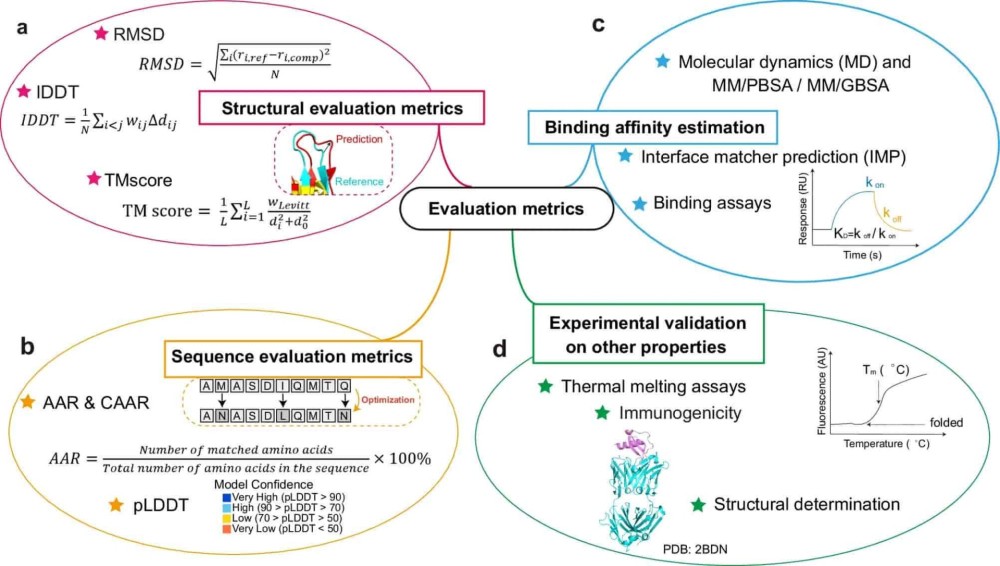
While AI enables rapid generation and prioritization of antibody candidates, experimental validation remains necessary to confirm predicted properties. In particular, developability attributes must be assessed using standardized and reproducible assays.
Early-stage experimental evaluation allows identification of liabilities related to stability, aggregation, and expression, supporting informed candidate selection. Integrating developability assessment with antibody expression workflows further enhances efficiency by enabling parallel evaluation of multiple candidates.
Service providers like Biointron, offering antibody developability assessments, can support these workflows by providing access to validated assays, scalable platforms, and rapid turnaround times. Such capabilities enable biotech companies to bridge the gap between computational prediction and experimental confirmation, facilitating more efficient progression from discovery to development.
AI is expected to play an increasingly central role in antibody and ADC development. Future advances will likely focus on integrating multimodal data, including sequence, structure, and clinical information, into unified predictive frameworks.
The development of models capable of predicting complex behaviors, such as ADC pharmacokinetics and intracellular dynamics, will further enhance design capabilities. At the same time, continued investment in experimental validation and high-quality datasets will remain essential to ensure the reliability and applicability of AI-driven approaches.
ADC High-throughput Antibody Conjugation →
Lu, Y., Huang, W., Li, Y., Xu, Y., Wei, Q., Sha, C., & Guo, P. (2025). Leveraging artificial intelligence in antibody-drug conjugate development: From target identification to clinical translation in oncology. Npj Precision Oncology, 9(1), 374. https://doi.org/10.1038/s41698-025-01159-2
Kavousipour, S., Barazesh, M., & Mohammadi, S. (2025). Artificial intelligence in antibody design and development: harnessing the power of computational approaches. Medical & Biological Engineering & Computing, 63(12), 3475–3501. https://doi.org/10.1007/s11517-025-03429-4
Wasdin, P. T., Johnson, N. V., Janke, A. K., Held, S., Marinov, T. M., Jordaan, G., Gillespie, R. A., Vandenabeele, L., Pantouli, F., Powers, O. C., Vukovich, M. J., Holt, C. M., Kim, J., Hansman, G., Logue, J., Chu, H. Y., Andrews, S. F., Kanekiyo, M., Sautto, G. A., & Ross, T. M. (2025). Generation of antigen-specific paired-chain antibodies using large language models. Cell, 188(25), 7206-7221.e16. https://doi.org/10.1016/j.cell.2025.10.006
Galindo, G., Maejima, D., DeRoo, J., Burlingham, S. R., Fixen, G., Morisaki, T., Febvre, H. P., Hasbrook, R., Zhao, N., Ghosh, S., Mayton, E. H., Snow, C. D., Geiss, B. J., Ohkawa, Y., Sato, Y., Kimura, H., & Stasevich, T. J. (2026). AI-assisted protein design to rapidly convert antibody sequences to intrabodies targeting diverse peptides and histone modifications. Science Advances. https://doi.org/adx8352
Biointron announces limited-time RushData launch pricing for high-throughput ant……
August 2026 brought another mix of acquisitions, licensing agreements, strategic……
Antibody discovery often begins with a highly diverse population of B cells, onl……
As larger candidate panels move from computational design into the laboratory, a……