




The therapeutic antibody landscape has expanded rapidly, with monoclonal antibodies (mAbs) established as a dominant class of biologics across oncology, autoimmune, and infectious diseases. At the same time, the number of investigational antibody candidates continues to increase, placing pressure on development pipelines to deliver candidates efficiently.
Within this context, the time required to identify lead antibody candidates has become a critical determinant of overall program success. Conventional antibody discovery approaches, particularly hybridoma-based methods, require labor-intensive workflows involving immunization, cell fusion, cloning, and iterative screening. These processes are inherently low-throughput and can extend discovery timelines to months or longer.
Because antibody development is sequential, delays in discovery directly propagate into downstream stages. The time required to reach preclinical and clinical milestones is therefore strongly influenced by the efficiency of early-stage discovery. Accelerating discovery is not only a matter of operational efficiency but a prerequisite for maintaining competitiveness in increasingly crowded therapeutic areas.
The consequences of slow antibody discovery extend beyond early-stage timelines. Traditional low-throughput approaches limit the number and diversity of candidates that can be evaluated, constraining the ability to identify optimal antibodies with favorable binding and developability properties.
A central challenge in antibody development is the need to evaluate large sequence spaces to identify candidates with appropriate specificity, affinity, and physicochemical properties.
Limitations of slow discovery include:
Restricted exploration of antibody sequence diversity
Increased reliance on iterative experimental optimization
Higher probability of advancing suboptimal candidates
Greater burden on downstream development processes
Downstream processes, including expression, purification, and stability assessment, are inherently complex for antibody therapeutics due to their dependence on correct folding, post-translational modifications, and structural integrity. If candidates with poor developability profiles are identified late, additional optimization cycles are required, introducing delays and increasing costs.
In contrast, faster and more comprehensive discovery workflows enable earlier identification of high-quality candidates. High-throughput approaches allow screening of larger and more diverse repertoires, increasing the likelihood of identifying antibodies with favorable properties at an earlier stage. This reduces late-stage attrition and minimizes the need for extensive re-engineering.

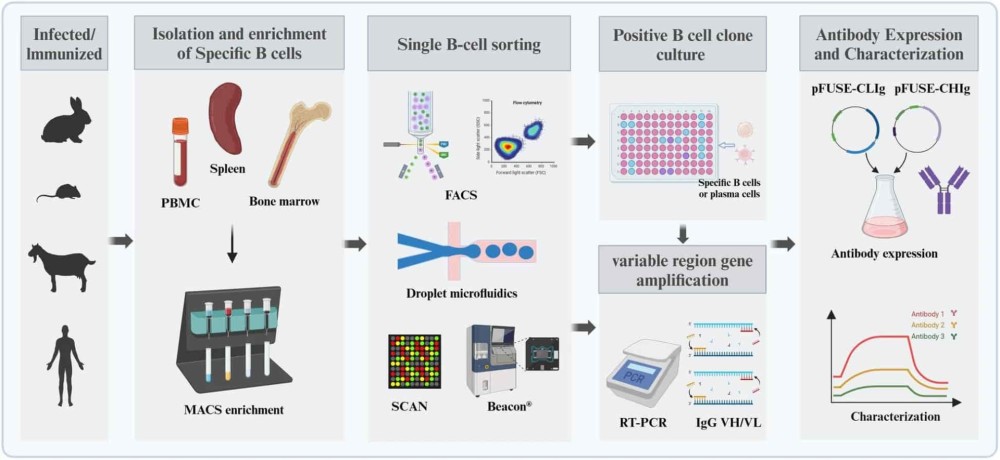
Advances in high-throughput screening (HTS) technologies have fundamentally transformed antibody discovery workflows. Modern platforms, including antibody library display technologies and single B cell approaches, enable rapid and parallel interrogation of large antibody repertoires, significantly increasing efficiency compared to traditional methods.
Major high-throughput discovery approaches include:
Antibody library display technologies
Phage and mammalian display systems
Support large, diverse libraries and iterative enrichment
Single B cell technologies
Direct isolation of antigen-specific B cells
Preservation of native heavy/light chain pairing
Microfluidic screening platforms
Droplet-based encapsulation at kilohertz frequencies
Enable millions of parallel assays at single-cell resolution
Microfluidic technologies further extend the capabilities of single-cell approaches. Droplet microfluidics enables encapsulation of individual cells or particles into picoliter-scale droplets at kilohertz frequencies, allowing millions of parallel assays to be performed within hours. This approach supports functional screening at single-cell resolution while maintaining the linkage between genotype and phenotype.
A key advantage of these high-throughput systems is their ability to detect rare antibody clones. Because antigen-specific B cells may represent a small fraction of the total population, efficient identification requires screening large numbers of cells. Microfluidic platforms improve detection sensitivity by isolating individual cells in controlled microenvironments, reducing dilution effects and enhancing signal detection.
Collectively, these technologies shift antibody discovery from sequential, low-throughput workflows to highly parallelized processes. This transition significantly reduces the time required to identify candidate antibodies while increasing the diversity and quality of the resulting leads.
AbDrop™: Microfluidic-Based Single B Cell Screening Platform →
The integration of next-generation sequencing (NGS) and computational approaches has introduced a data-driven paradigm in antibody discovery. NGS technologies enable high-throughput analysis of antibody repertoires, providing detailed insights into sequence diversity and facilitating the identification of rare clones with desirable properties.
By coupling high-throughput screening with sequencing, it becomes possible to establish relationships between antibody sequence and function. This enables rapid prioritization of candidates based on binding characteristics and other measurable properties. NGS platforms can process large numbers of sequences in parallel, significantly accelerating the identification of promising leads compared to traditional sequencing approaches.
Machine learning (ML) further enhances this process by leveraging large datasets of antibody sequences and experimental measurements. ML models can be trained to predict key properties, including affinity, specificity, and stability, based on sequence and structural features. These predictive capabilities reduce reliance on empirical trial-and-error methods and allow more efficient exploration of antibody sequence space.
The combination of high-throughput experimentation and computational modeling creates a closed-loop system in which experimental data informs model training, and model predictions guide subsequent candidate selection. This iterative framework accelerates both discovery and optimization, enabling more efficient identification of therapeutic antibodies.
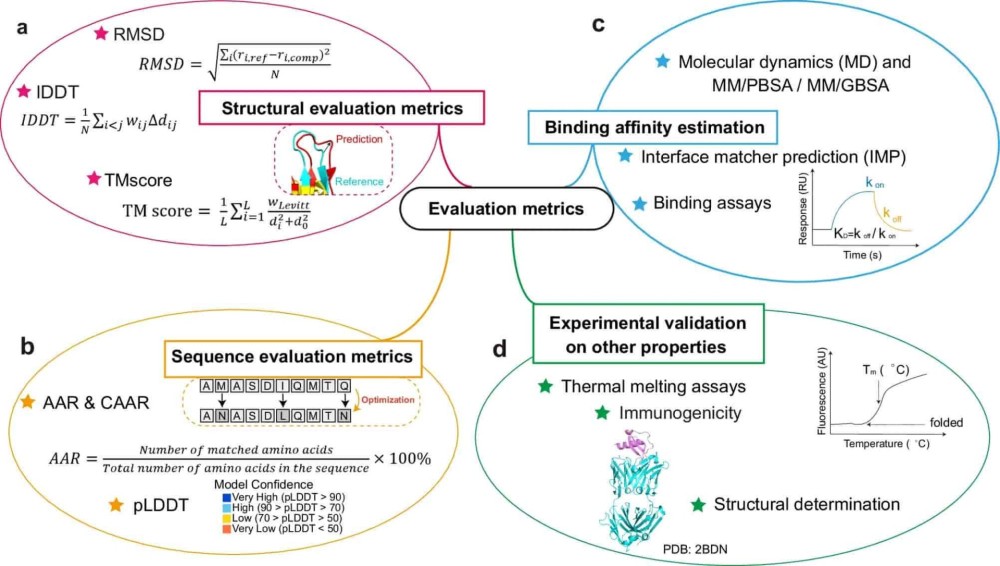
In addition to accelerating candidate identification, high-throughput discovery platforms enable earlier assessment of developability characteristics. After initial screening, antibodies must be evaluated for properties such as binding affinity, specificity, and stability.
Common high-throughput characterization techniques include:
ELISA – plate-based binding assessment
Bio-layer interferometry (BLI) – real-time interaction analysis
Surface plasmon resonance (SPR) – kinetic and affinity measurements
These methods provide detailed kinetic and affinity data, supporting the selection of candidates with optimal binding profiles. Advances in instrumentation have increased throughput, enabling simultaneous analysis of dozens to hundreds of interactions, thereby reducing the time required for characterization.
Stability assessment is also critical for evaluating manufacturability. Techniques such as differential scanning fluorimetry (DSF) enable rapid, high-throughput evaluation of antibody stability by monitoring protein unfolding behavior. Early identification of stability issues allows prioritization of candidates with favorable physicochemical properties, reducing the likelihood of downstream failure.
By integrating developability assessments into early discovery workflows, high-throughput platforms support more informed decision-making. This reduces the risk of advancing suboptimal candidates and improves overall efficiency in the development pipeline.
Despite advances in individual technologies, the overall speed of antibody discovery is influenced by how effectively these components are integrated into cohesive workflows. Fragmented processes, where screening, sequencing, expression, and validation are conducted independently, introduce delays due to data transfer, reformatting, and repeated validation steps.
Integrated platforms enable:
Direct transition from screening to sequencing
Streamlined expression and validation workflows
Reduced turnaround time across discovery stages
For example, high-throughput screening can be directly coupled with sequencing and expression systems, enabling rapid transition from candidate identification to functional validation. Automation and standardized protocols further reduce variability and improve reproducibility across stages.
Such integration is particularly important for maintaining the benefits of high-throughput discovery. Without efficient downstream processing, gains achieved during screening may be offset by delays in subsequent steps.
Comprehensive antibody discovery services that incorporate multiple platforms, such as single B cell screening, antibody library display, sequencing, and recombinant expression, provide a practical solution for accelerating timelines. By leveraging established workflows and specialized expertise, these platforms enable efficient progression from target identification to lead candidate selection.
References:
Wang, X.-D., Ma, B.-Y., Lai, S.-Y., Cai, X.-J., Cong, Y.-G., Xu, J.-F., & Zhang, P.-F. (2025). High-throughput strategies for monoclonal antibody screening: advances and challenges. Journal of Biological Engineering, 19(1). https://doi.org/10.1186/s13036-025-00513-z
Das, D., McGrath, J. S., Moore, J. H., Gardner, J., & Blom, D. (2025). Recent Advances in Antibody Discovery Using Ultrahigh-Throughput Droplet Microfluidics: Challenges and Future Perspectives. Biosensors, 15(7), 409. https://doi.org/10.3390/bios15070409
Matsunaga, R., & Tsumoto, K. (2025). Accelerating antibody discovery and optimization with high-throughput experimentation and machine learning. Journal of Biomedical Science, 32(1). https://doi.org/10.1186/s12929-025-01141-x
Biointron announces limited-time RushData launch pricing for high-throughput ant……
August 2026 brought another mix of acquisitions, licensing agreements, strategic……
Antibody discovery often begins with a highly diverse population of B cells, onl……
As larger candidate panels move from computational design into the laboratory, a……