




Antibody production technologies encompass various methods used to produce antibodies for therapeutic, diagnostic, and research purposes. The following are some of the primary technologies used in antibody production:
Hybridoma Technology:
Hybridoma technology is the traditional method to produce monoclonal antibodies (mAbs). It involves fusing immortal myeloma cell lines with antibody-producing B lymphocytes to produce a hybrid hybridoma cell line. This cell line is cultured to produce antibodies against a specific antigen either through in vivo or in vitro methods.1 Bispecific antibodies have been developed from this method by chemical conjugation of two mAbs or fusion of two hybridomas, generating hybrid hybridomas.2
Phage Display:
Phage display is a method where a library of antibody fragments is displayed on the surface of bacteriophages. This allows in vitro selection of mAbs of any specificity and affinity, in addition to genetic and functional analyses. The phages displaying the desired antibody fragments can be isolated and used to produce those specific antibodies.3
Recombinant Antibody Technology:
Recombinant antibody production involves the use of genetic engineering. Antibody genes are inserted into expression vectors (such as plasmids) and introduced into host cells (e.g., bacteria, yeast, or mammalian cells). Mammalian cells are commonly used in producing therapeutic antibodies, and further advancements have allowed production of afucosylated antibodies, where FUT8 alleles are knocked out from the genome of CHO cells.4,5
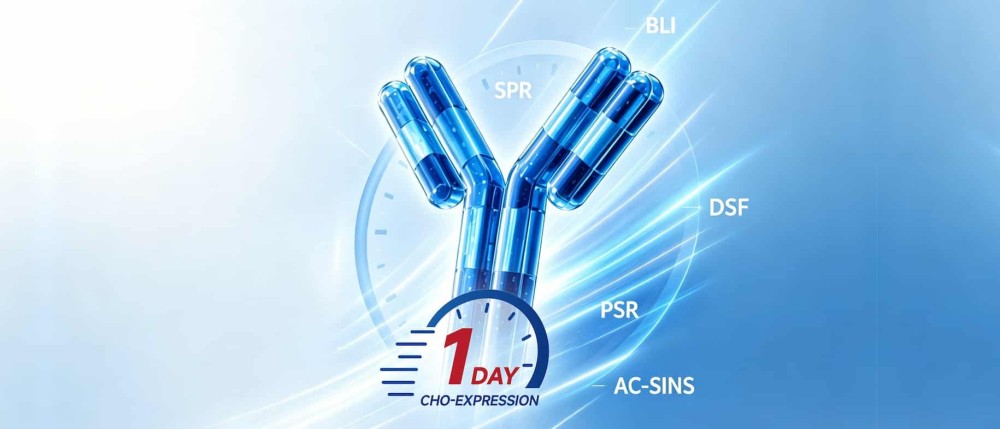
To further streamline and enhance small-scale production of antibodies, RushMab™ small-scale expression packages offer efficient solutions that utilize recombinant technologies and advanced expression systems. These packages are designed to support rapid antibody production with high specificity and scalability, making them an ideal choice for research and therapeutic applications.
Mitra, S., & Tomar, P. C. (2021). Hybridoma technology; advancements, clinical significance, and future aspects. Journal of Genetic Engineering & Biotechnology, 19. https://doi.org/10.1186/s43141-021-00264-6
Brinkmann, U., & Kontermann, R. E. (2017). The making of bispecific antibodies. MAbs, 9(2), 182-212. https://doi.org/10.1080/19420862.2016.1268307
Hammers, C. M., & Stanley, J. R. (2014). Antibody Phage Display: Technique and Applications. The Journal of Investigative Dermatology, 134(2), e17. https://doi.org/10.1038/jid.2013.521
Frenzel, A., Hust, M., & Schirrmann, T. (2013). Expression of Recombinant Antibodies. Frontiers in Immunology, 4, 51304. https://doi.org/10.3389/fimmu.2013.00217
Pereira, N. A., Chan, K. F., Lin, P. C., & Song, Z. (2018). The “less-is-more” in therapeutic antibodies: Afucosylated anti-cancer antibodies with enhanced antibody-dependent cellular cytotoxicity. MAbs, 10(5), 693-711. https://doi.org/10.1080/19420862.2018.1466767
Biointron’s Antibodies After Hours: From Algorithms to Antibodies was held at Th……
Discover how high-throughput wet-lab validation connects AI-designed antibody se……
Understand the hybridoma generation process for monoclonal antibody production, ……
Artificial intelligence (AI) is changing how therapeutic antibodies are discover……